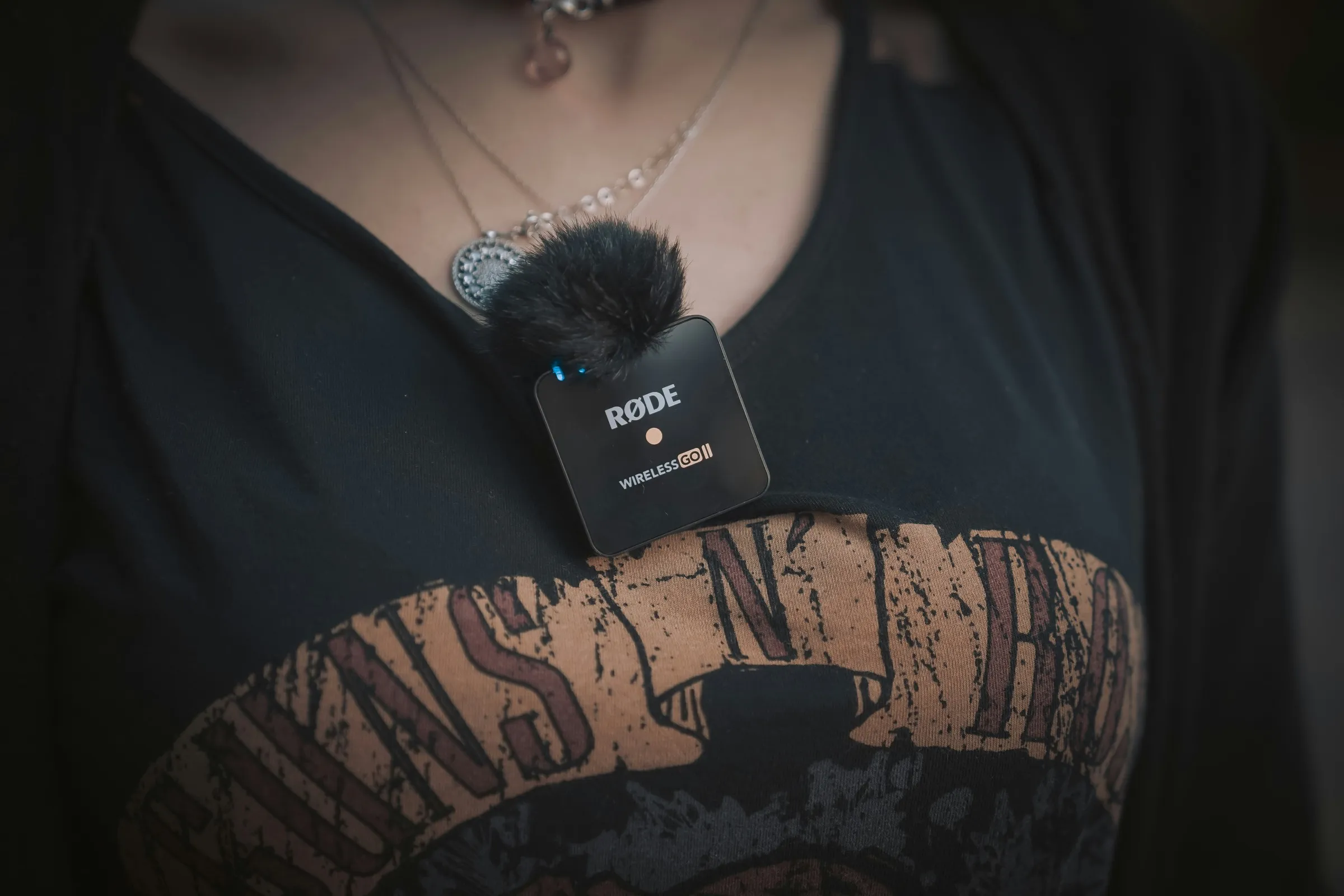
For years I told myself a microphone is one of those things that “still has life in it.” The Rode Wireless GO II served me well on weddings, real-estate videos, and my own travels, and I never had a reason to replace it. This year that changed – and not because the GO II broke.
Why bother with audio when filming is the main job
A viewer will forgive a slightly soft shot or weaker composition. They won’t forgive crackly, distorted, or hard-to-hear audio – they’ll close the video within seconds. On the road it’s even worse, because you’re fighting wind, crowds, and traffic noise, which a camera mic picks up just as loudly as a speaker three meters away.
What served me well for a long time: the Rode Wireless GO II
A two-channel wireless system, small, reliable, with decent range for everyday filming. I had no issues with it for years – until I started tackling tougher situations (interviews in noisy environments, longer range between speaker and camera), where I had to keep a closer eye on the recording level in advance so I wouldn’t overshoot or undershoot it.
What the new generation brought across the market
This year saw several major wireless audio upgrades land, not just from Rode:
- Rode Wireless GO 3 (Gen 3) – 32-bit float recording, range increased from 200 m to 260 m, a lockable 3.5mm input on both transmitters, smart GainAssist, and up to 7 hours of battery life. It essentially brings the earlier Pro-tier features down into a more accessible line.
- Panasonic DMW-DMS1 – a compact shotgun mic with 32-bit float and six directional modes, aimed at Lumix users, but it shows the trend: 32-bit float is no longer an exclusive feature of expensive setups.
- GoPro wireless mic system – up to 150 m range, 24-bit/48kHz recording, aimed squarely at travel/vlogging use.
- Insta360 Mic Pro – a three-element mic array with AI noise suppression, interesting especially for changing environments (street → indoors → wind outside).
The common thread: 32-bit float recording is moving from an expensive exclusive feature to a standard, even in a more accessible price bracket. That’s exactly the moment an upgrade makes sense – not because the old gear stopped working, but because the new generation solves precisely the problems I previously had to manage manually.
Why I’m treating this as a sensible upgrade, not a whim
32-bit float in practice means I don’t have to nail the input level in advance. Even if the audio is unexpectedly loud (a shout, a passing car) or quiet, it can be rescued in post without distortion or noise. On the road, where the ambient volume changes every minute and I don’t have time to watch a meter, that’s exactly the difference that saves footage that would otherwise end up in the trash.
The Rode Wireless GO III is the logical choice – I stay within the same brand and ecosystem, but with a real jump in specs, without having to learn a completely new control system.
Practical takeaway
- For spoken word/interviews on the road: a wireless mic, always – the camera mic only as backup.
- 32-bit float isn’t marketing – it genuinely saves footage where the volume changes and you don’t have time to watch it.
- An upgrade makes sense when the new generation solves a specific problem you actually had – not just because “something new came out.”
Gear in this post
affiliate · AlzaTransparency: this article contains an affiliate link (Alza). If you buy something through it, I get a small commission at no extra cost to you – I only recommend things I actually use or would use.
FAQ
Can the viewer actually hear/see the difference in audio quality, or is it just a technical advantage?
They can hear it, especially in noisier environments. 32-bit float recording means you don't have to nail the input level in advance – even if the audio is too loud or too quiet, it can be rescued in post without distortion. The viewer won't see that directly, but they'll notice it in how clean the audio sounds.
Is a wireless mic worth it when the camera's built-in mic would do?
For interviews and spoken word, definitely yes – a camera mic also picks up ambient noise, and distance from the speaker worsens the signal-to-noise ratio. For clean B-roll without dialogue, you don't need one.
Can I still sell or use the old generation of mic after buying a new one?
The Rode Wireless GO II holds decent resale value, especially in good condition. Alternatively I can keep it as a backup for a second audio source (say, for a second person in an interview) instead of selling it.